


 Clipart
 Vectors
 Digital Papers
 3D cutting
 PowerPoint Kits
 Chip bags
 Giant Duvalín
 Video Invitations
 Cake toppers
 School Labels
 Mugs
Mugs Cushions
Dec
One of the most common questions that comes up when deciding to put together a printable kit is what kind of paper to use. And the best answer is: whatever you like!!! As long as it works with your printer, of course. It sounds simple—and it is—but sometimes having so many options to choose from when it comes to paper can make us feel uncertain and complicate things. That’s why I wanted to share this post with you to explain three types you should consider, so you can understand the differences in their characteristics and their pros and cons depending on the project you’re about to tackle.
1. Weight:
One of the characteristics we should consider is the weight. The weight indicates the thickness of the paper, and therefore how thin (soft) or thick (stiff) it is. The higher the weight, the thicker the paper and, therefore, the sturdier it is. The paper we usually buy for printing documents—sometimes called “office paper”—is typically 90 grams. It is thin and easy to cut.
I've put together a table here to help explain how the paper is used in each case.
| Weight | Thickness | Usage | Pros | Cons |
| 90 grams | Fine | Perfect for candy bar wrappers, pennants, and patterned paper to use as decorative accents. | Easy to cut, malleable, and inexpensive | It can break easily |
| from 90 grams to 150 grams | Medium | It can be used for candy bar wrappers, party flags, cards, table decorations, toppers, cupcake wrappers, or figures to stick on the wall | The higher the weight per unit area, the more body your creation will have, the better it will hold its shape, and the longer it will last. | It may be a little more expensive than regular thin paper |
| 150 grams or more | Thick | It's ideal for anything that's large or needs to stand on its own, such as welcome signs, figures, and especially boxes. | Whatever you put together will hold its shape and won't break easily. | The cost is a little higher than the previous ones. |
If you have a laser printer, it's the same thing—there's almost the same variety of paper as I mentioned earlier, all you have to do is specify when you buy it that it’s for a laser printer, since these printers use static electricity to attract the powdered toner to the paper, which is then transferred using a system of pressure and heat—and this process can’t be done on just any kind of paper.
The paper I use most often is glossy or photo paper (as it’s called for inkjet printers) or illustration paper for print shops or laser printers. I particularly like using satin or glossy paper because it makes the ink shine more and brings out the colors of whatever is being printed. But be sure to experiment with other types of paper—I’ve achieved some very interesting results using recycled paper, tracing paper, wood-textured paper, and even magnetic paper.
One type of paper I rarely use—except for very specific projects—is self-adhesive paper, since I find it expensive, and using a glue stick to attach regular paper to a piece of candy gives me the same result without costing as much. Another tip: look for paper on websites such as Mercadolibre or stores that specialize in computer and printer supplies; at these places, you'll find more options and much better prices than at regular bookstores.
3. The Format:
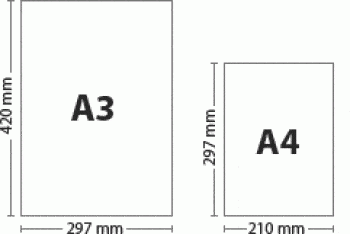
Finally, and very briefly, I wanted to mention paper sizes. The one we’re most familiar with is A4, and that’s the size most printable kits come in. But there are other sizes, such as A3, which is equivalent to two A4 sheets. If you’re having your kit printed at a print shop and they want to keep costs down, it might be a good idea to ask them to print two A4 sheets of your kit together on a single A3 sheet.
I hope you found this post helpful! Don't forget to subscribe to our blog to get updates!
No post is complete without your comments, so please feel free to leave me your questions… and if you liked it, share it with your friends. See you next time!
